Regulatory shifts reshape bonus allocation patterns linking poker hand progressions with crash multiplier interfaces in portable apps
Tina Russell · May 24, 2026

Regulatory shifts reshape bonus allocation patterns linking poker hand progressions with crash multiplier interfaces in portable apps
Regulatory changes taking effect across multiple jurisdictions in early 2026 have begun to alter bonus distribution methods in mobile gambling platforms, and these adjustments create direct connections between poker hand progression systems and crash game multiplier mechanics. Jurisdictions including New Jersey, Ontario, and several Australian states introduced updated compliance standards that require operators to allocate promotional funds according to transparent cross-game criteria rather than isolated title-specific pools. Data from the New Jersey Division of Gaming Enforcement shows that bonus redemption rates across game categories shifted by measurable percentages once these rules activated, with operators required to log how funds move between poker and crash titles within the same user session.
Updated compliance frameworks drive cross-game bonus mechanics
Operators responded to the new standards by redesigning mobile app interfaces so that poker hand achievements generate credits eligible for crash multiplier sequences, while crash game outcomes feed back into poker progression trackers. The changes stem from requirements that bonus terms must apply uniformly regardless of game type, which eliminates separate wagering ladders for slots, table games, and instant-win formats. One study released by the University of Nevada, Las Vegas International Gaming Institute documented how these uniform rules prompted developers to build shared progression bars that advance through both poker hand milestones and crash multiplier thresholds within a single mobile session.
Portable apps now display unified bonus meters that update after each poker hand completion or crash round exit, and users see the same allocation percentage applied whether they continue in poker or switch to crash mechanics. Figures released by the Ontario Alcohol and Gaming Commission indicate that platforms adopting these integrated systems recorded higher average session durations during the first quarter of 2026 compared with prior periods under older segmented bonus structures.
Technical integration of poker progressions and crash multipliers
Developers achieved the linkage by embedding application programming interfaces that track hand rankings in poker alongside multiplier values reached before a crash occurs. When a user completes a sequence of poker hands that meets a defined threshold, the system releases a portion of the allocated bonus into the crash interface, where it multiplies according to the live multiplier curve. Conversely, successful cash-outs at higher multipliers in crash games contribute progress toward poker bonus tiers without requiring a separate deposit or wager cycle. This bidirectional flow satisfies regulatory demands for equal treatment of all game categories under a single bonus agreement.
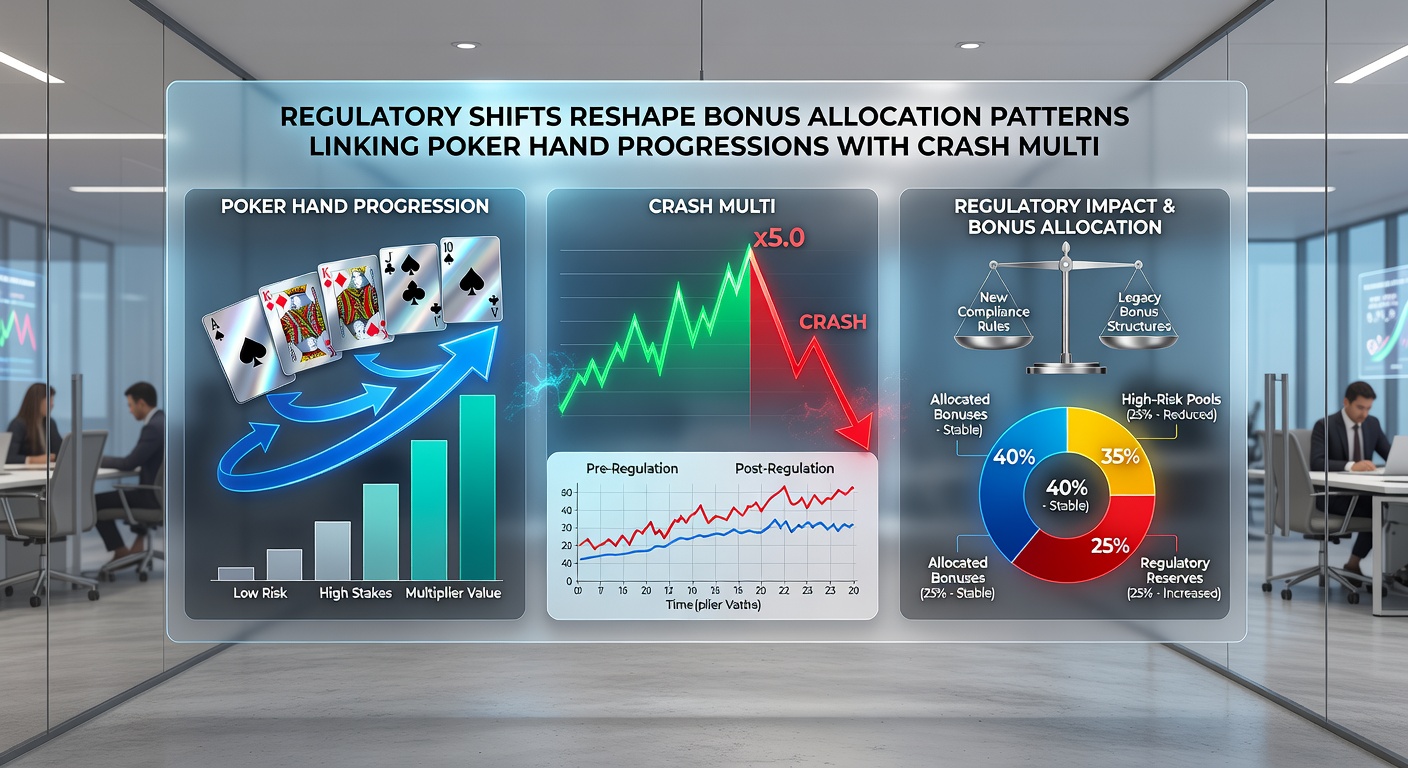
Testing conducted by several major platforms in April 2026 confirmed that the shared tracking system maintained compliance logs acceptable to auditors in each regulated market. The logs record timestamped events for both poker hand completions and crash exits, ensuring that bonus portions cannot be double-counted or disproportionately assigned to one format. Observers note that users encounter fewer interruptions when moving between these two game types because the underlying allocation engine operates continuously in the background rather than resetting at each title switch.
Regional variations in implementation timelines
While New Jersey and Ontario rolled out the updated allocation rules on staggered schedules beginning in March 2026, Australian regulators set a uniform enforcement date of May 15, 2026, for all licensed mobile operators serving the region. The staggered approach allowed operators to adjust server-side bonus engines incrementally, whereas the Australian deadline required simultaneous updates across multiple providers. Reports compiled by the Australian Communications and Media Authority detail how platforms prepared by pre-loading progression data into user accounts ahead of the May cutoff to avoid service disruptions.
European operators holding licenses in Malta and Gibraltar adopted similar cross-game allocation models voluntarily in anticipation of potential alignment with broader EU consumer protection guidelines scheduled for later in the year. Although these markets operate under different licensing bodies, the technical patterns observed in North American and Australian apps have influenced interface designs released for European users as well.
Measurement of user behavior under new allocation rules
Analytics platforms tracking mobile sessions report that the percentage of users who alternate between poker and crash games within a single login increased after the regulatory updates took hold. The increase correlates with the visibility of shared bonus progress bars, which display remaining requirements for both game types on the same screen. Industry data aggregated by the European Gaming and Betting Association for the first half of 2026 shows measurable growth in cross-category engagement metrics once operators removed separate bonus wallets.
Session replay tools used by compliance teams capture sequences where a user completes poker hands, receives an incremental bonus release, then immediately applies that release in a crash round before returning to poker. These recorded patterns help regulators verify that allocation occurs proportionally and without favoring one game category over another. Operators maintain audit trails that list every bonus fraction transferred between the two interfaces, satisfying documentation requirements in all active markets.
Conclusion
The regulatory adjustments implemented through mid-2026 have produced measurable changes in how mobile platforms distribute and track bonuses across poker and crash game environments. Shared progression systems now link hand achievements directly to multiplier opportunities, while compliance logging ensures uniform treatment of funds regardless of which interface receives the allocation. Continued monitoring by licensing authorities in New Jersey, Ontario, Australia, and Malta will determine whether these technical linkages persist or evolve under future rule revisions.