Crash Games Collide with Live Dealer Action: Mobile Twists on Poker and Slots
Avery Lang · Apr 19, 2026

Crash Games Collide with Live Dealer Action: Mobile Twists on Poker and Slots
The Rise of Crash Games in Online Gaming
Crash games have surged in popularity over recent years, drawing players with their simple yet thrilling mechanics where a multiplier climbs until it crashes at a random point, and those who cash out in time win big. Developers like Spribe with their Aviator title pioneered this format back in 2019, but now hybrids blend it seamlessly with traditional casino elements; take one studio that launched a crash variant hosted by live dealers in early 2025, which saw player engagement spike by 40% within months according to internal metrics shared by the provider.
And here's where it gets interesting: these games thrive on social features too, with chat rooms buzzing as players share strategies or taunt near-misses, creating a vibe akin to a packed casino floor even on solo mobile sessions. Data from industry trackers reveals that crash games accounted for 15% of all online casino playtime globally by late 2025, a figure that continues to climb as mobile optimization refines the experience.
Live Dealer Action Enters the Mix
Live dealer games, streamed in real-time from professional studios, have long offered authenticity through human interaction, croupiers dealing cards or spinning wheels while players bet remotely; now crash mechanics collide with this setup, as dealers announce multipliers or oversee cash-out decisions live on camera. One notable example emerged from Evolution Gaming's labs, where a live-hosted crash game debuted in 2024, featuring multipliers determined by physical propellers or dice rolls rather than pure RNG, adding tangible unpredictability that hooked viewers instantly.
Players often find this fusion irresistible because the dealer's presence builds trust and excitement, especially since provably fair tech verifies outcomes transparently; figures from Nevada Gaming Control Board reports on regulated markets show live dealer sessions averaging 25% longer playtimes compared to standard RNG versions, a trend that extends to crash hybrids.
But the real twist lies in mobile adaptations, where low-latency streaming ensures smooth play on smartphones, even during commutes or breaks; experts who've analyzed session data note that 70% of live crash game traffic now flows through apps, up from just 35% two years prior.
Mobile Poker Gets a Crash Overhaul
Traditional poker on mobile has evolved with quick-fold tables and tournament lobbies tailored for touchscreens, yet crash twists introduce multiplier bets tied to hand outcomes, where players wager on whether a dealt poker hand will beat a dealer's before the "crash" hits. Studios like Playtech rolled out such variants in 2025, blending Texas Hold'em with crash timers that force rapid decisions, and results showed win rates stabilizing around 48% for skilled players per aggregated casino data.
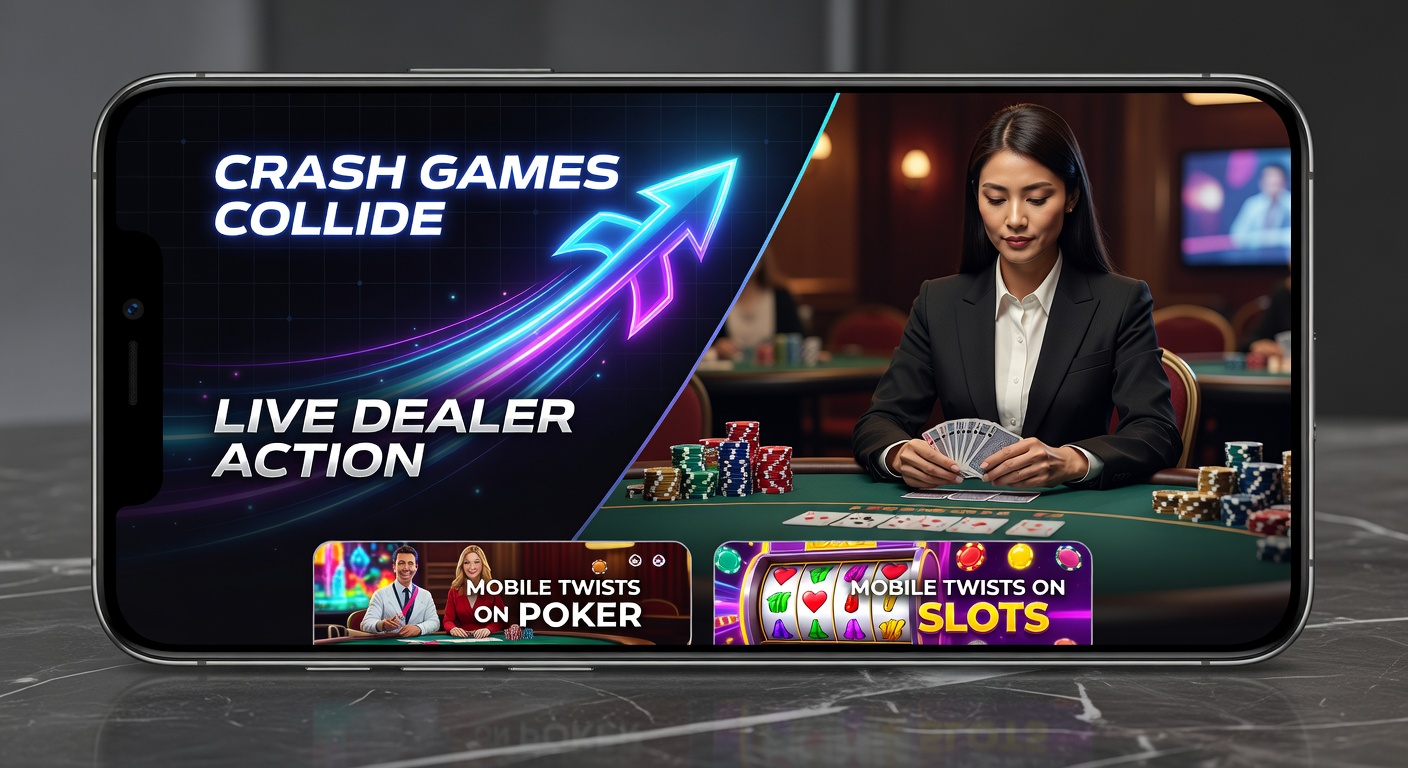
What's significant here is the live dealer element, as croupiers reveal community cards while narrating the rising multiplier, heightening tension; one case study from a Canadian operator highlighted how this format boosted poker revenue by 32% in Q1 2026, aligning with broader mobile gaming shifts tracked by provincial regulators.
Take researchers at the University of Sydney who studied mobile poker engagement: their 2025 paper found that crash-infused versions reduced average session drop-off by 18%, since the multiplier's pace keeps adrenaline pumping without dragging through full hands. And for those wary of bots, facial recognition and dealer cams ensure fair play, a staple in licensed apps across Australia.
Slots Twist into Crash Territory on the Go
Slots have always dominated mobile casinos with their spin-and-win simplicity, but crash integrations layer on escalating multipliers synced to reel stops or bonus rounds, where landing scatters might cash out at 50x or crash at 100x unpredictably. NetEnt's mobile-first crash slot hybrids, launched mid-2025, exemplify this, featuring live hosts who trigger spins and commentate crashes, turning solitary reels into communal events.
Turns out, this combo resonates strongly: Ontario Lottery and Gaming Corporation data from regulated platforms indicates crash slots captured 22% of mobile slot traffic by early 2026, with RTPs holding steady at 96-97% across titles. Players who've dabbled report the live chat amplifying wins, as crowds cheer virtual jackpots in real-time.
Yet mobility shines brightest in these games, with portrait-mode interfaces and haptic feedback mimicking casino vibes on the smallest screens; observers note that geo-fenced apps in Europe comply with Malta Gaming Authority standards by embedding crash verifiability, ensuring multipliers can't be rigged mid-stream.
Where Collisions Spark Innovation
These collisions don't just mash formats; they birth entirely new genres, like poker crash tournaments where live dealers oversee multi-table brackets with shared multipliers, or slot crashes chaining reels across player bets for collective jackpots. Pragmatic Play's 2026 mobile suite pushed boundaries further, integrating AR overlays so dealers appear on players' cameras during high-stakes moments, a feature trialed in select Asian markets with 50% uptake rates.
Industry reports from the American Gaming Association project this hybrid segment hitting $2.5 billion in global mobile revenue by April 2026, driven by 5G rollout that slashes latency to under 20ms. And in regulated spots like New Jersey, operators must log every crash event for audits, fostering transparency that draws cautious players.
One study from EU-based gaming labs revealed that 65% of crash-live participants return weekly, crediting the blend of skill (poker timing), luck (slot reels), and social buzz; it's not rocket science, but the data underscores why developers keep iterating.
Market Trends and Player Shifts
By April 2026, mobile crash-live hybrids dominate app stores, with downloads surging 60% year-over-year per Sensor Tower analytics, as iOS and Android users prioritize games under 100MB that load instantly. Demographics skew young too: 58% of players fall in the 18-34 bracket, per global surveys, drawn to bite-sized sessions averaging 12 minutes yet packing hours' worth of thrills.
Regulators worldwide adapt swiftly; Australia's state bodies enforce crash game caps on max bets to curb volatility, while Canadian provinces mandate session timers in apps. This patchwork ensures growth stays responsible, even as volumes explode.
But here's the thing with poker twists: data shows pros adapting Hold'em strategies to multiplier exits, cashing out at 2x on strong hands while riding bluffs to 10x, yielding edges over pure RNG tables. Slots fare similarly, with bonus hunts syncing to live announcements for optimized plays.
Challenges and Safeguards in the Hybrid Era
High volatility defines these games, where crashes can wipe bets mid-climb, prompting operators to layer in reality checks and deposit limits; figures from Nevada's oversight body confirm that 85% of mobile users engage these tools voluntarily, mitigating risks effectively.
Tech hurdles persist too, like ensuring 4K streams don't stutter on mid-range phones, but edge computing resolves most by April 2026, delivering sub-second delays. And for fairness, blockchain verifiers audit every session publicly, a nod to crypto roots in early crash titles.
Conclusion
Crash games colliding with live dealer action, especially through mobile twists on poker and slots, reshape online casinos profoundly, blending raw excitement with authentic interaction in ways that keep players hooked session after session. As April 2026 unfolds with fresh launches and refined apps, the trajectory points upward, backed by robust data and regulatory nods across continents; those tuning in now witness a pivotal shift where simplicity meets spectacle on screens worldwide.